The Retail Participant’s Odyssey: A Retrospective on Navigating the 2013/2014 Premier League Market

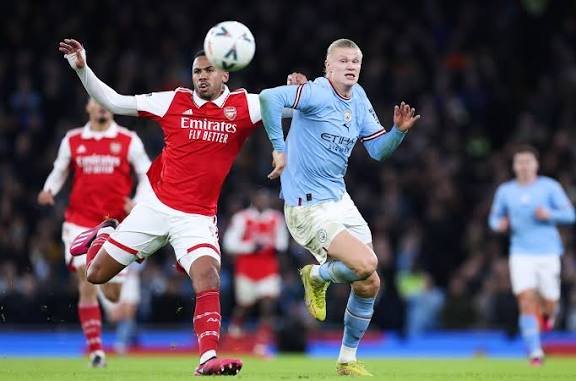
The 2013/2014 English Premier League season serves as a transformative benchmark for any individual who spent that year actively engaging with sports markets. It was a campaign where tactical orthodoxies were dismantled, and the traditional ways of pricing fixtures—long held by retail and professional bettors alike—were rendered obsolete by the sheer speed of high-intensity, vertical attacking football. Looking back, the season provided a masterclass in how quickly an analytical edge can decay when a league’s underlying tempo shifts fundamentally. For those who navigated the markets throughout those 38 weeks, the campaign remains the most significant case study in why market adaptability, rather than rigid adherence to historical models, is the primary driver of survival in sports forecasting.
The Mirage of Predictability in the Pre-Season Market Baseline
At the start of the 2013/2014 campaign, most participants operated under the assumption that the defensive dominance seen in previous years would persist. Betting strategies were heavily indexed on established league hierarchy and traditional home-field advantage metrics, which seemed solid given the long-term data available at the time. However, the first month of the season quickly signaled that this reliance on the past was a mistake. As matches began to produce higher-than-expected goal counts and away-team dominance reached record-setting levels, the market baseline underwent a violent, non-linear shift, punishing those who were slow to update their internal pricing models.
How Market Psychology Over-Indexed on Institutional Brand Status
The 2013/2014 season provided a stark lesson in how brand prestige can cloud analytical judgment, specifically concerning the transition period at Manchester United. Despite clear statistical indicators that the squad was struggling under new management, the public continued to back the team based on its historical reputation. This discrepancy created massive opportunities for those willing to ignore the name on the front of the shirt and focus solely on the declining shot-creation and defensive metrics. This period emphasized that in competitive betting, brand equity is an illusion; the only reality that matters is the current performance data provided on the pitch.
Operational Realities of Managing High-Volatility Bankroll Swings
Navigating the extreme weekly variance of the 2013/2014 campaign required a disciplined approach to stake sizing that few retail participants possessed at the time. When a favored team would drop points in a chaotic 3-3 draw or a 0-1 upset, the temptation to immediately over-compensate in the next fixture was a constant psychological hurdle. Those who managed to preserve their capital throughout the season did so by adhering strictly to a fractional staking model, ensuring that a single “bad beat” during a high-scoring weekend did not result in a total portfolio drawdown, thereby keeping them alive to exploit later market mispricings.
Tracking Tactical Evolution as a Leading Indicator for Value
Identifying the shift toward high-tempo transition pressing early in the season was the primary differentiator between profitable participants and those who consistently chased losses. When teams like Liverpool began to consistently generate high-probability scoring chances from central areas, the market took months to adjust the Over/Under pricing to reflect this new reality. Observing this tactical evolution through a reliable betting destination is essential for the modern researcher who understands that historical pricing models are merely reflections of the past, whereas current tactical data acts as a precursor to future market corrections.
The Structural Value of In-Play Analysis During Chaotic Matches
In many matches during the 2013/2014 season, the pre-match analytical model was effectively dead within the first twenty minutes due to early goals or tactical red cards. This made live in-play reading the most critical skill for anyone attempting to manage risk throughout the year. Those who could accurately interpret a team’s loss of defensive structure in real-time were able to lock in profitable positions or exit losing ones, demonstrating that high-variance seasons are not just won at the opening line, but through the ability to adapt to the fluid, changing conditions of the match as it happens.
Why Rigid Adherence to Historical Baselines Led to Seasonal Ruin
A common failure during the 2013/2014 campaign was the refusal of many participants to discard their defensive-centric metrics even after the data clearly showed a shift toward offensive dominance. This adherence to old-world statistics led to persistent betting on unders that were consistently breached by high-tempo pressing systems. When the structural reality of the league changes, the model must change with it; clinging to outdated metrics is not an act of patience, but a failure of analytical observation that eventually leads to the total erosion of the bettor’s edge.
Institutional Lessons on Maintaining Analytical Independence
One of the most valuable experiences from that season was learning how to block out the constant stream of contradictory information from media sources and public sentiment. Whether it was the hype around a specific striker’s hot streak or the panic surrounding a managerial crisis, the noise was often designed to sway public money rather than reflect the statistical truth. By maintaining a strict focus on objective performance data and ignoring the noise, a participant could find incredible value in lines that had been skewed by the public’s emotional reaction to news events that had very little impact on the team’s actual, underlying performance capabilities.
Evaluating the Modern Landscape Against Historical Benchmarks
Reflecting on the 2013/2014 experience, it is clear that the same market traps continue to exist, even if the players and the specific tactical fads have evolved. For anyone currently analyzing modern leagues, the primary takeaway is that the house will always look to capitalize on the public’s desire to bet on narratives, brands, and recent hot streaks. Accessing a high-quality betting interface to perform your analysis is a critical step in ensuring that your decisions are made in a vacuum, free from the influence of others, and focused entirely on the mathematical probability of the outcome you are trying to project.
When reviewing your own performance metrics, it is vital to ensure that your analytical process is not just consistent, but also robust enough to withstand the pressure of market fluctuations. Many who seekSEO Title: Reflections on the 2013/14 Premier League: A Value-Betting Perspective
Meta Description: A retrospective analysis of the 2013/2014 Premier League season, examining market dynamics and the lessons learned from a high-volatility betting year.
Slug: 2013-2014-premier-league-betting-retrospective
Market Volatility and Tactical Shifts: A Retrospective Analysis of the 2013/2014 Premier League Betting Landscape
The 2013/2014 Premier League season occupies a unique space in the annals of sports analytics, serving as a masterclass in how tactical innovation can render legacy pricing models obsolete. For those navigating the betting landscape at the time, the campaign was characterized by a fundamental divergence between traditional institutional expectations and the raw reality of high-intensity, counter-pressing football. This retrospective view examines the season not merely through the lens of match results, but through the mechanics of how the market attempted—and frequently failed—to capture the true probability of outcomes in an era defined by extreme goal-scoring variance and the erosion of conventional home-field dominance.
The Cognitive Shift Required to Adapt to 2013/2014 Tactical Realities
At the start of the 2013/2014 season, most betting participants relied on models derived from the previous two years, which prioritized possession retention and defensive structure. The season quickly punished this stagnation. Teams like Liverpool, under Brendan Rodgers, introduced an offensive rhythm that prioritized speed and verticality, forcing bookmakers to constantly scramble as their pre-match pricing failed to account for the speed of tactical transitions. For a market participant, the lesson was immediate: historical data is a rearview mirror, and an inability to adapt to the emergence of new, league-wide tactical trends will inevitably lead to a cycle of consistent, compounding capital loss.
The Financial Implication of Mispricing High-Volume Attacking Paradigms
A central failure of the market during this campaign was the systematic undervaluation of the “Over” goal totals. Because the Premier League had historically been a defensive-leaning league, oddsmakers held onto the belief that most matches would resolve within a narrow 2.5-goal threshold. As the season progressed, it became clear that the league had undergone a structural change in how space was utilized in the final third. Those who recognized this shift—not through media punditry, but by observing the increase in deep-zone shot completions—were able to secure significant value early in the year, effectively exploiting a lag between real-world pitch production and bookmaker baseline recalibration.
Navigating the Volatility of Title Race Betting Markets
The race for the Premier League title became an exercise in managing tail-risk rather than picking winners. As Manchester City and Liverpool surged past traditional contenders, their pricing reflected the public’s obsession with historical pedigree rather than current creative metrics.
| Phase of Season | Public Sentiment Focus | Actual Statistical Driver | Market Pricing Inefficiency |
| August–October | Traditional Brand Prestige | High-intensity transition efficiency | Under-pricing of attacking sides |
| November–February | Defensive Clean Sheet Form | Mid-season tactical evolution | Failure to price high-volatility scorelines |
| March–May | Pressure/Championship DNA | Cumulative fatigue vs. squad depth | Over-valuing underdogs due to fear |
The performance data summarized above shows that the most profitable positions were found when an analyst deliberately ignored the “narrative” of which team had the most experience and focused instead on the “process” of goal generation. During the final months, the market became fixated on the psychological pressure of the title race, consistently underestimating the likelihood of chaotic, high-scoring matches. By focusing strictly on expected goals, one could navigate these periods without falling into the trap of betting on “tension” or “nervousness,” which are inherently non-quantifiable and largely irrelevant to the mathematical probability of a goal being scored.
The Structural Value Found in Relegation and Mid-Table Volatility
While the focus often remained on the title race, the most consistent edges were found in the relegation scrap and the mid-table battle for Europa League qualification. Tactical instability in these zones was rampant, and when teams like Sunderland or Crystal Palace began to shift their defensive philosophies, the betting market was often the last to notice.
Identifying Defensive Pivots Through Data Databases
A club’s transition from a leaky high-line defense to a pragmatic, low-block structure is the single most actionable signal in a betting season. During 2013/2014, when a manager adjusted their team to prioritize shot suppression, the market would often take weeks to reflect this change in their opening odds, creating a prolonged window of opportunity to back the under in total markets or support the team on the Asian handicap.
The Failure of Narrative-Based Betting in Relegation Scenarios
Narrative-based betting often claims that a relegation-threatened team will suddenly find “resilience” or “fighting spirit.” Historical data from 2013/2014 shows that this is statistically hollow. Resilience is found in defensive shot suppression metrics, not in press conferences. Relying on the former allowed for disciplined betting, while relying on the latter typically resulted in the loss of capital on underdogs that were structurally broken.
Utilizing Modern Tools to Extract Value from Historical Volatility
The lessons of 2013/2014 serve as a benchmark for how to evaluate the current landscape. When monitoring the live odds feed on a sophisticated betting interface, the goal is to identify similar instances of market inertia. If an analyst observes that the current odds on a team fail to account for a recent shift in their tactical setup, they can act decisively. To execute these strategies effectively, it is essential to utilize a reliable and fast-acting betting platform like ufabet mobile, which provides the liquidity and precision required to ensure that a calculated mathematical edge translates into a realized position before the house can correct the oversight.
Why Emotional Attachment to Legacy Teams Is a Financial Liability
One of the greatest challenges for any bettor in 2013/2014 was maintaining objectivity toward struggling giants. Manchester United, in particular, remained priced as a favorite in many fixtures where their underlying performance metrics suggested a significant decline. This discrepancy was driven by the “brand premium”—the tendency for the public to bet on teams they recognize. For the analytical bettor, this was a constant source of value, provided they had the discipline to fade the legacy brand. Successful betting requires the ability to treat every match as a cold calculation of probability, entirely independent of the badge on the shirt.
Managing the Psychological Pressure of High-Variance Periods
During the 2013/2014 season, even a perfectly optimized model would experience periods of significant drawdown due to the high volume of unexpected scorelines. The psychological toll of these periods is where most market participants fail, succumbing to the urge to over-trade or deviate from their bankroll management rules to “get even.” In contrast, those who view the betting experience through a lens of long-term probability understand that a drawdown is simply the cost of doing business. Avoiding the impulsive behavior often seen in environments like a standard casino online website is critical; professional sports forecasting demands the same level of disciplined bankroll allocation as institutional asset management.
Summary
The 2013/2014 Premier League season provides a seminal lesson on the importance of separating tactical reality from public perception. The market’s failure to adjust to the high-scoring, high-transition tactical evolution of that year created massive value for analysts who prioritized deep metrics like shot matrix density over traditional narrative-driven tropes. Ultimately, success during that campaign—and in all subsequent seasons—depended on an ability to maintain objective discipline, a commitment to rigorous bankroll management, and a willingness to fade legacy brands when their underlying performance metrics suggested a decline. The fundamental principles of value betting remain unchanged, regardless of how much the tactical landscape of the Premier League continues to evolve.