

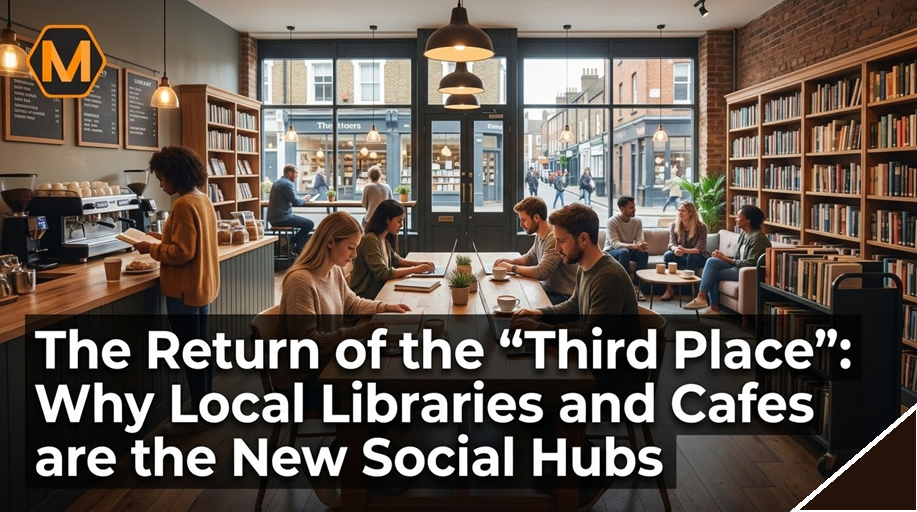
The concept of the “Third Place” is undergoing a massive cultural revival across the UK and the globe in 2026. Originally coined by sociologist Ray Oldenburg in the 1980s, a “third place” refers to a social environment separate from the two primary spheres of our lives: the home (the first place) and the workplace or school (the second place). For decades, these spaces—think pubs, coffee shops, hair salons, and town squares—were the heartbeat of community life. However, as digital life accelerated and “hustle culture” moved our interactions to Zoom and Slack, many of these physical anchors began to fade. Today, the pendulum is swinging back with a vengeance. People are tired of the isolation of “doom-scrolling” at home and the sterile efficiency of corporate offices. We are seeing a desperate craving for “low-stakes” social interaction, where you can be among people without the pressure of a formal meeting or a pre-planned event.
This resurgence is particularly visible among the younger generation, who are spearheading the transition from digital-first to physical-first social habits. Gen Z and Gen Alpha are moving away from the constant connectivity of social media, choosing instead to embrace “soft wellness” and communal productivity. Whether it is a local independent cafe with mismatched furniture and low-fi beats or a modernized public library with high-speed fiber and quiet zones, these spaces provide a sense of belonging that a screen simply cannot replicate. For many students and remote workers, these hubs are essential for mental clarity. Balancing a heavy workload often requires a change of scenery to keep the brain engaged and prevent the “walls closing in” feeling of a small apartment. When the pressure of a deadline becomes too much to handle alone, many find that a busy cafe provides the perfect “body doubling” environment to focus, or they might seek out professional coursework help from trusted platforms like myassignmenthelp to ensure their academic targets stay on track while they enjoy the refreshing community atmosphere of their favorite local spot.
The Architecture of Connection: Beyond Four Walls
What makes a library or a cafe a true “third place” isn’t just the fact that they sell lattes or lend books. It is the “social architecture” of the space—the way it encourages unplanned encounters. In 2026, the most successful hubs are those designed for “fluidity.” They offer “deep work” zones for intense focus and “chatter zones” for collaborative brainstorming. Modern UK libraries, for instance, have moved far beyond the “shush” culture of the past. Many now feature podcasting studios, gaming lounges, and even “maker spaces” where people can 3D print prototypes or learn traditional crafts. They have effectively become town squares with roofs, providing a sanctuary for people from all walks of life.
This shift is a direct response to the “loneliness epidemic” that peaked in the early 2020s. Humans are inherently social creatures, but we are also increasingly protective of our personal time. The beauty of a third place is that it offers “optionality.” You can sit in a corner and be completely alone with your thoughts, or you can strike up a conversation with the regular sitting at the next table. It provides the “background hum” of humanity that a home office simply cannot replicate. For those studying complex societal structures or human behavior, this real-world observation acts as a living laboratory. The academic intensity of 2026 is higher than ever, with many degrees focusing on real-world problem solving and interdisciplinary research. Because of this complexity, the demand for specialized social science assignment help has skyrocketed, as students look for expert guidance to navigate the nuances of community dynamics, urban planning, and social policy.
The Student Perspective: Why Libraries are “Cool” Again
For a long time, libraries were seen as dusty, intimidating places. That image has been completely dismantled by a new wave of “Library Influencers” and community-led renovations. In 2026, the library is the ultimate “hack” for the modern student. With the cost of living still a major factor in the UK, libraries offer a free, high-quality environment that is inclusive to everyone. They are the only places left on the high street where you can sit for six hours without being expected to spend money. This inclusivity is vital for social equity; it ensures that a student from a low-income background has the same access to premium study environments and high-speed resources as a wealthy professional.
The table below illustrates how the “Third Place” has evolved over the last few decades to meet the modern needs of students and remote workers:
| Feature | The Traditional Library (Pre-2010) | The Modern Third Place (2026) |
| Primary Goal | Silent individual study and book lending. | Social connection, creation, and collaboration. |
| Noise Level | Strictly silent; “shushing” common. | Zoned: Silent areas vs. active discussion zones. |
| Technology | Fixed desktop computers with limited internet. | High-speed Wi-Fi, VR labs, and charging hubs. |
| Social Aspect | Solitary; interaction discouraged. | Community events, “knit and natter,” and workshops. |
| Food & Drink | Strictly forbidden. | In-house cafes or “bring your own” policies. |
The Psychology of “Ambient Belonging”
Why do we work better in a crowded cafe than in a silent bedroom? Psychologists call this “ambient belonging.” When we are surrounded by people who are also being productive, it creates a subconscious social contract. You are less likely to fall down a YouTube rabbit hole if the person sitting across from you is typing away on their thesis. This “passive accountability” is one of the strongest drivers behind the return to cafes.
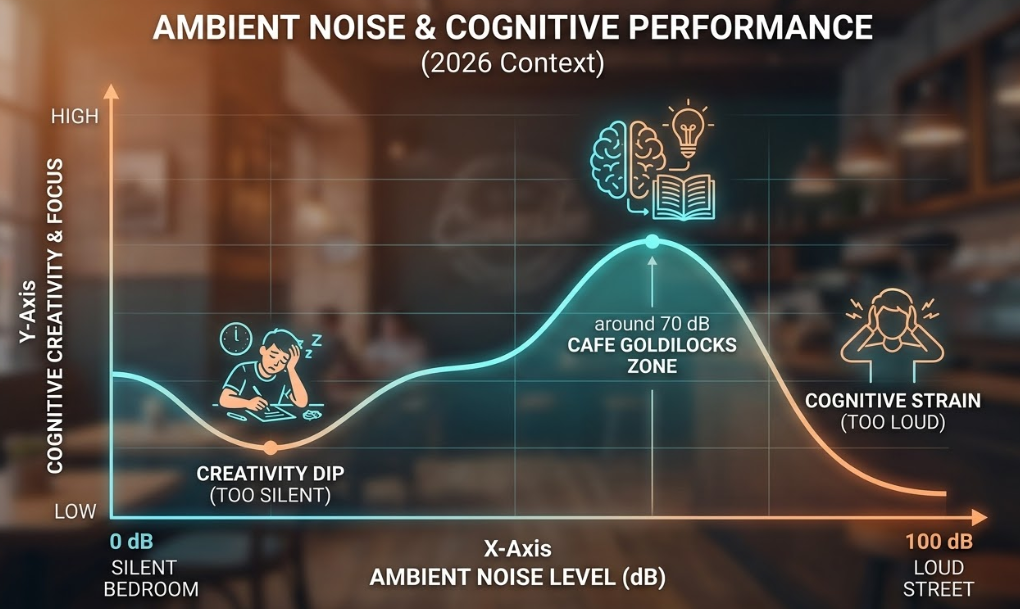
Furthermore, the “moderate ambient noise” of a coffee shop—the clinking of ceramic, the steam wand of the espresso machine—has been scientifically proven to trigger “abstract processing” in the brain. Unlike a loud construction site or a dead-silent room, a cafe’s noise level sits at around 70 decibels, which is the “Goldilocks zone” for creativity. This is why many students find that their best writing happens in these environments.
The Rise of the “Laptop Lifestyle” and High Street Survival
While libraries provide the quietude, cafes provide the raw energy. The “Laptop Lifestyle” has evolved from a niche trend for digital nomads into a standard way of living for millions of UK residents. Local cafes have adapted by offering “workday memberships” or specific “co-working tables” that come with dedicated power outlets and ergonomic seating. This has turned the local high street into a decentralized office campus, breathing new life into local economies that were previously struggling.
From a sociological standpoint, this is a fascinating reversal of the “death of the high street” narrative. We are seeing the “professionalization” of the cafe. It is no longer just a place to grab a quick caffeine fix; it is where deals are signed, where startups are born, and where final-year dissertations are finally completed. This hybridity is essential for the 2026 workforce, which values flexibility above all else. However, this lifestyle requires a high degree of self-regulation. Without a boss watching over your shoulder, the responsibility to perform lies solely on the individual. This is why many people use a combination of physical third places and digital support services to maintain their output.
Mental Health and the “First Place” Boundary
One of the biggest arguments for the return of the third place is the protection of mental health. During the era of mandatory remote work, the boundaries between rest and labor became dangerously blurred. This led to “bedroom burnout,” where the brain no longer associates the home with relaxation or safety, but with stress and deadlines.
By physically moving to a “Third Place,” you create a mental “commute.” This physical transition acts as a reset button for the nervous system. Even a five-minute walk to the local library signals to your brain that the “rest” period is over and the “focus” period has begun. This separation allows people to actually relax when they return home, knowing that the “office” (the cafe or library) has been left behind.
Conclusion: The Future is Physical and Communal
As we look toward the end of the 2020s, the digital world will undoubtedly continue to expand, but our physical “Third Places” will become even more sacred as the antidote to digital fatigue. Whether it’s a high-tech library in the center of London or a cozy corner cafe in a small seaside village, these spaces are the glue that holds our social fabric together. They allow us to be productive without being isolated, and social without being overwhelmed.
For students and professionals alike, the message is clear: your environment dictates your mindset. If you find yourself struggling to focus or feeling the weight of your workload, step out of the house. Find your local hub, grab a seat, and re-engage with the world around you. The return of the third place isn’t just a trend; it’s a necessary evolution for a healthier, more connected society. And if the academic side of things feels like a mountain you can’t climb alone, remember that there is no shame in seeking a helping hand to get you back on track, allowing you more time to enjoy the community spaces that make life meaningful.
Frequently Asked Questions
Q. 1. What exactly is a “Third Place”?
A Third Place is a social environment outside of your home (the first place) and your workplace or school (the second place). These are neutral grounds, like cafes and libraries, where people can gather, relax, or work without the formal obligations of domestic or professional life.
Q. 2. Why are these spaces becoming more popular now?
After years of increasing digital isolation and remote work, many people are experiencing “screen fatigue.” Third places offer a sense of “ambient belonging,” allowing individuals to feel connected to their local community while maintaining their personal productivity.
Q. 3. How do libraries and cafes improve mental focus?
These environments provide a balance of background activity and moderate ambient noise, which can actually stimulate creative thinking. For many, the physical act of leaving the house creates a mental boundary that helps separate “work time” from “rest time,” reducing burnout.
Q. 4. Are modern libraries different from traditional ones?
Yes. In recent years, many libraries have transformed into vibrant community hubs. Beyond just lending books, they now offer collaborative zones, high-tech resources, and social workshops, making them inclusive spaces for both quiet study and creative interaction.
About The Author:
Ella Thompson is a dedicated education consultant and lead contributor at MyAssignmentHelp. With a deep passion for modern learning trends and community-driven productivity, Ella focuses on helping students navigate the evolving landscape of higher education through insightful research and practical academic strategies.
